Read The Room
Book Discovery
Solution
All the details that shape the project
Role
Lead designer and researcher, owning the concept and end to end product design.
Team
A fully solo project, with light feedback.
Timeline
I worked on Greenlight over the course or 2 weeks.
The Issue
Context, problem space, and design rationale
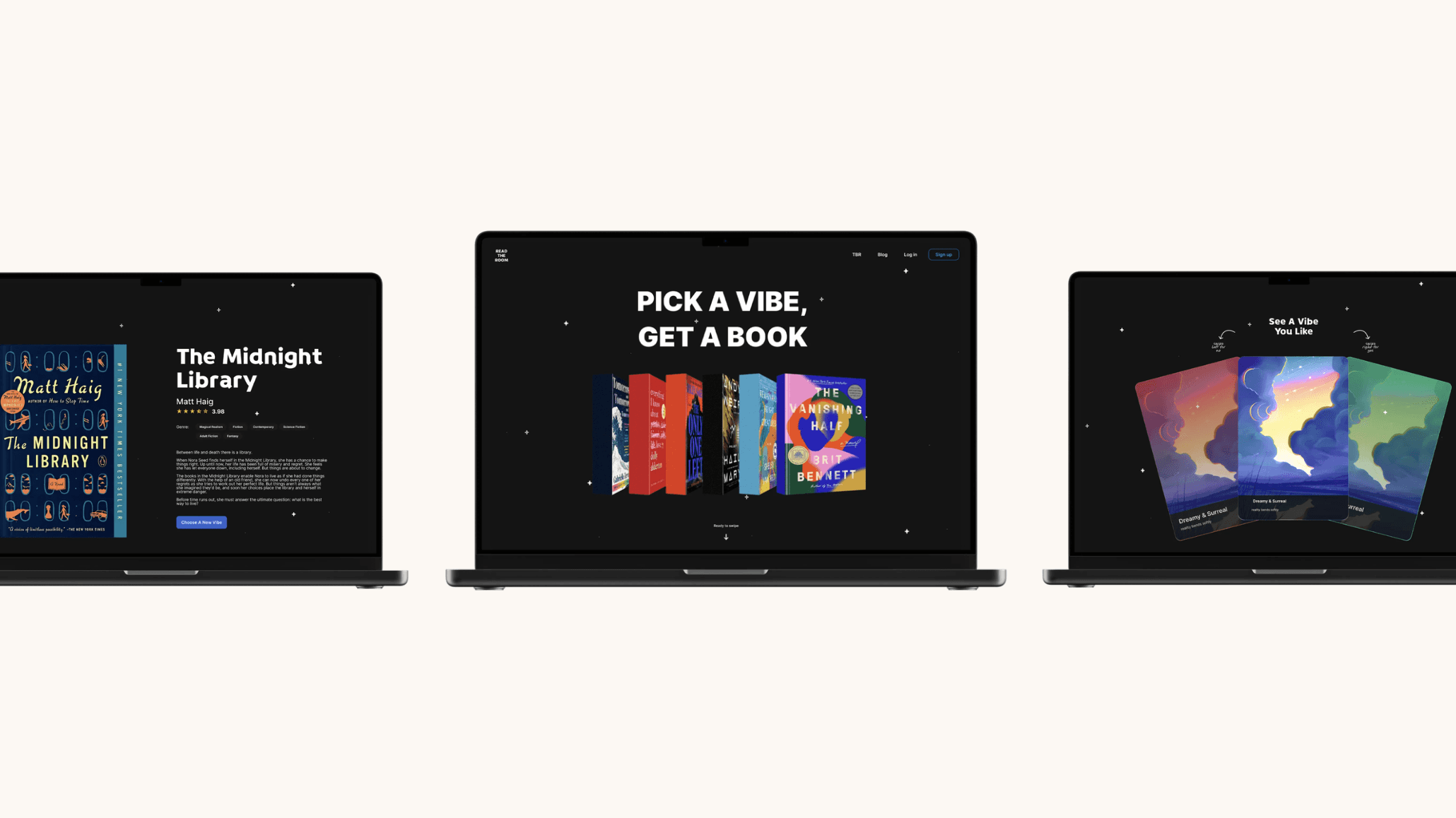
Read The Room is a concept led digital product exploring how people discover books in a world dominated by algorithms, ratings, and generic recommendations. The brief was to design an experience that moves beyond genre and popularity, instead helping users find books based on mood, emotional state, and situational context.
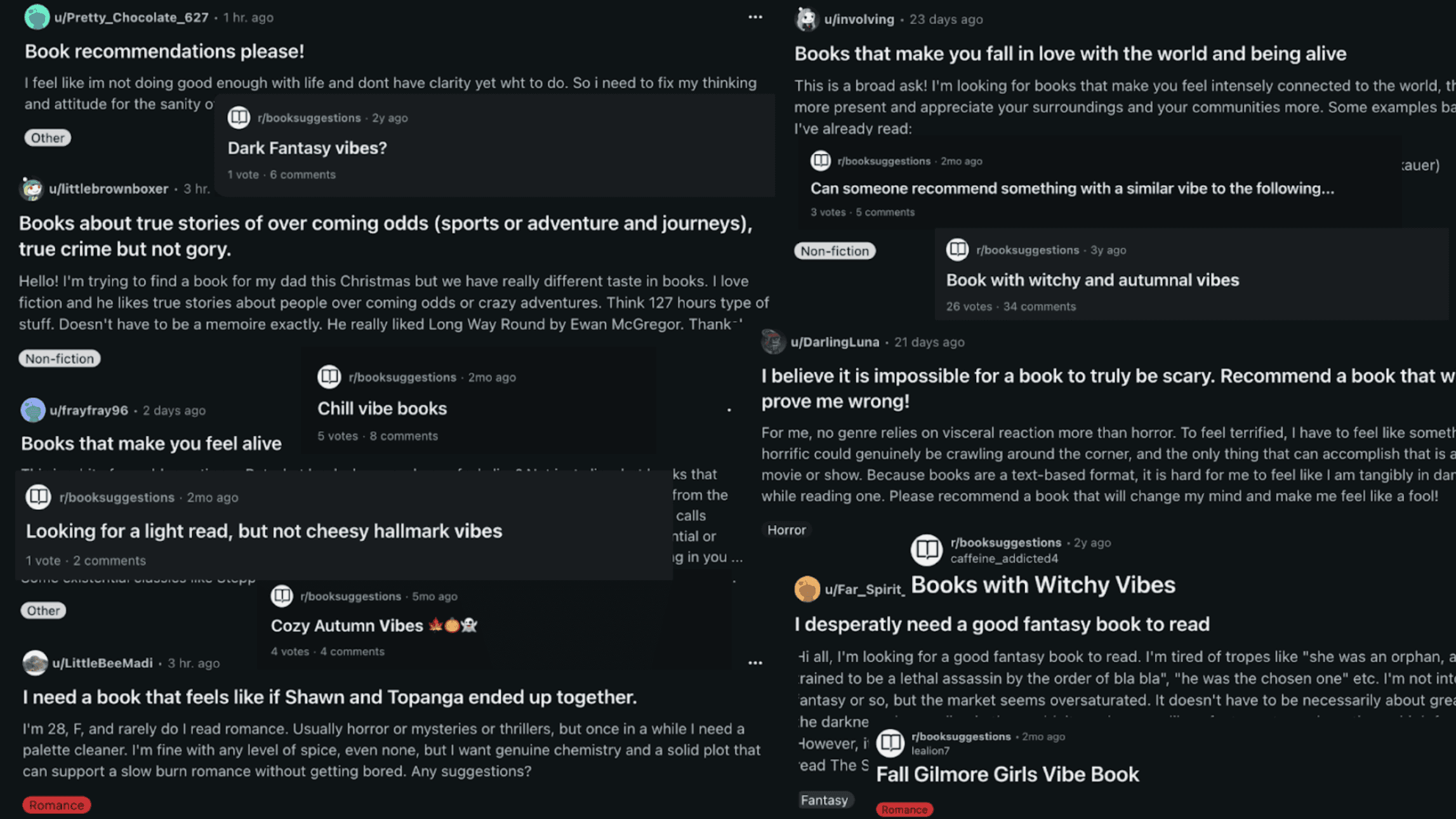
While existing platforms optimise for scale and similarity, they often fail to capture why someone wants to read in a specific moment. Choosing a book can feel overwhelming rather than inspiring, especially when users do not know what they are looking for but know how they want to feel.
The core challenge was translating something abstract and emotional into a clear, usable product experience. The project required balancing discovery with simplicity, emotion with structure, and creativity with usability, while avoiding the feeling of another content heavy catalogue.
Deliverables included but were not limited to a product definition, user flows, interaction design and a visual language.

The core challenge was translating something abstract and emotional into a clear, usable product experience. The project required balancing discovery with simplicity, emotion with structure, and creativity with usability, while avoiding the feeling of another content heavy catalogue.
Deliverables included product definition, user flows, interaction design, visual language, and a working web experience that demonstrates the concept in practice.
Problem Statement:
People struggle to discover books that match their current mood or emotional needs, relying instead on generic recommendations that feel impersonal and overwhelming.
Solution
Exploring and refining the right solution
The project began with exploring multiple solution directions, including recommendation feeds, quiz based discovery, editorial curation, and visual browsing models. Early exploration revealed that overly structured inputs reduced emotional resonance, while completely open discovery lacked clarity and direction.
Through iteration, the concept narrowed into a vibe based discovery model. Instead of asking users what genre they like, Read The Room asks them how they feel, what energy they want, or what kind of moment they are in. This allowed the experience to feel more intuitive and human, while still guiding users toward meaningful recommendations.
Each concept was evaluated against clarity, emotional relevance, ease of use, and scalability. The final direction prioritised lightweight interaction, strong visual cues, and language that feels more like a conversation than a filter.
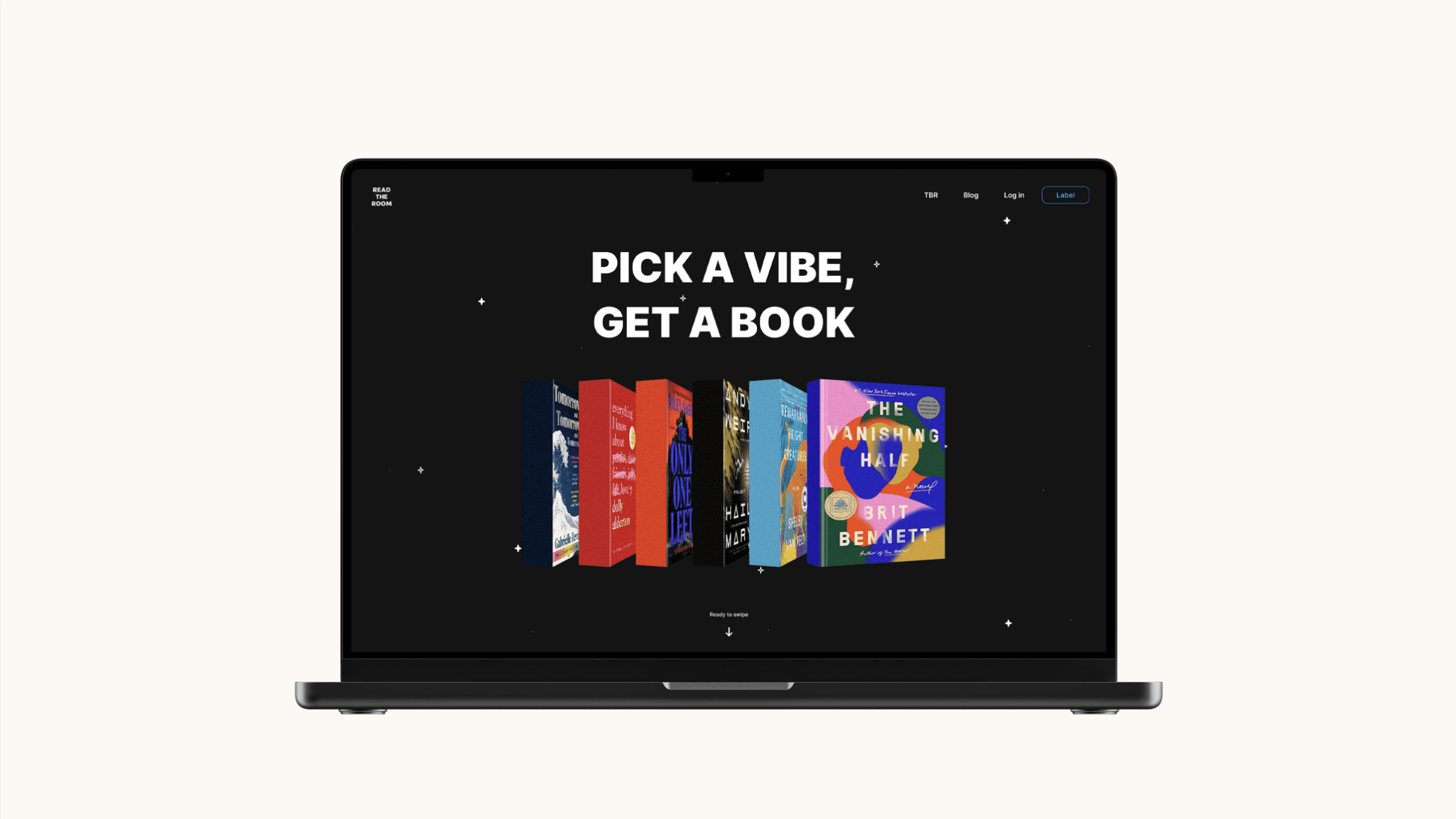
Read The Room is a web based book discovery platform that helps users find books through mood driven prompts rather than traditional categories.
Users explore curated “rooms” or emotional states, each tied to a specific reading vibe. From there, the product surfaces recommendations that feel intentional and personal, helping users discover books that match how they want to feel rather than what they already know.
The focus throughout was on reducing friction, removing pressure from choice, and making discovery feel calm, expressive, and enjoyable.
Process
Creating Airo from concept to final design
The project followed a research led design process, starting with desk research into reading habits, discovery fatigue, and existing book platforms. This was supported by informal user conversations exploring how people currently choose books and where frustration shows up.
With a clear direction established, I designed user flows, wireframes, and high fidelity interfaces, iterating on interaction patterns that felt natural and emotionally driven. Visual design played a central role, using typography, spacing, and colour to create a sense of mood and atmosphere rather than information density.
The final outcome was built and tested as a live web experience, allowing real interaction and validation of the concept.
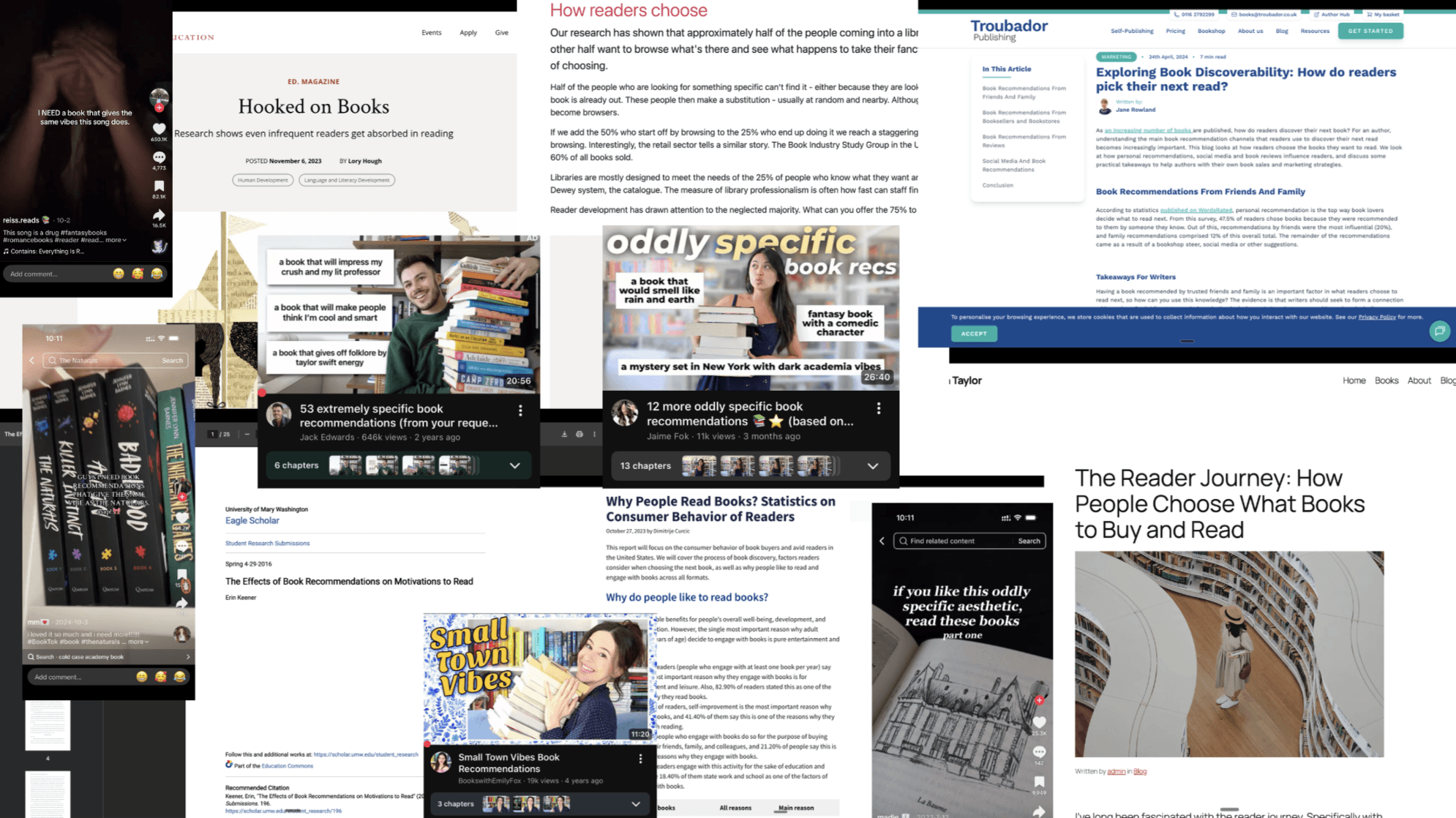
Desk Research & Competitor Analysis
I reviewed existing platforms such as Goodreads, StoryGraph, and traditional online bookstores. While each offered robust data, tagging, or social features, they largely relied on explicit user intent and rigid categorisation.
This highlighted an opportunity for Read The Room to occupy a different space. One focused on emotional intent, lightweight decision making, and visual storytelling rather than reviews, ratings, or algorithms.
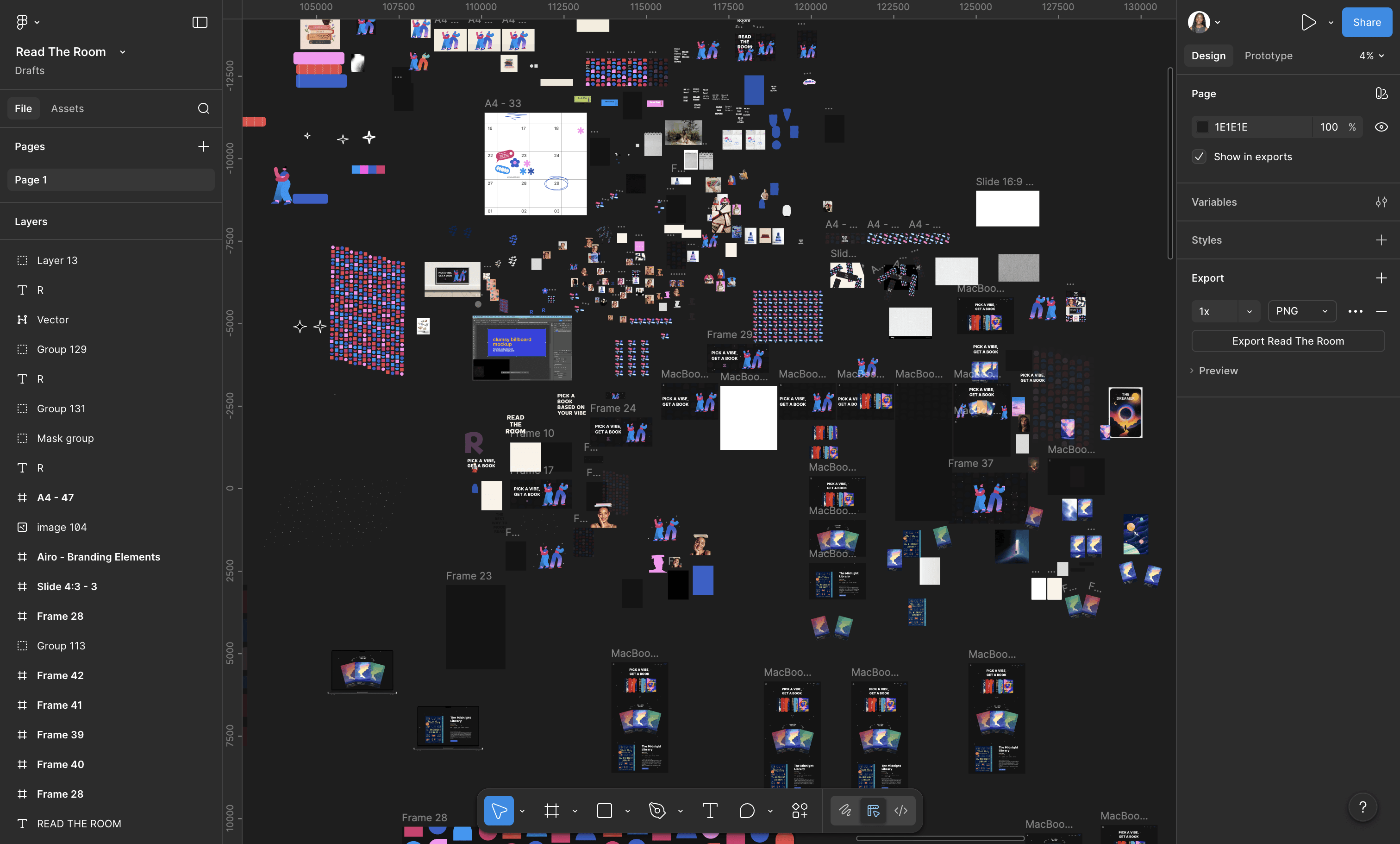
Sketching, Wireframing & Prototyping
I began with quick sketches to explore how a mood led discovery flow could work without feeling overly structured. This helped test early layouts for browsing and “room” based exploration and identify where the experience felt too restrictive or too vague. I then moved into wireframes and interactive prototypes to refine the core journey, focusing on reducing steps between intent and recommendation and ensuring the experience felt calm, intuitive, and easy to navigate.
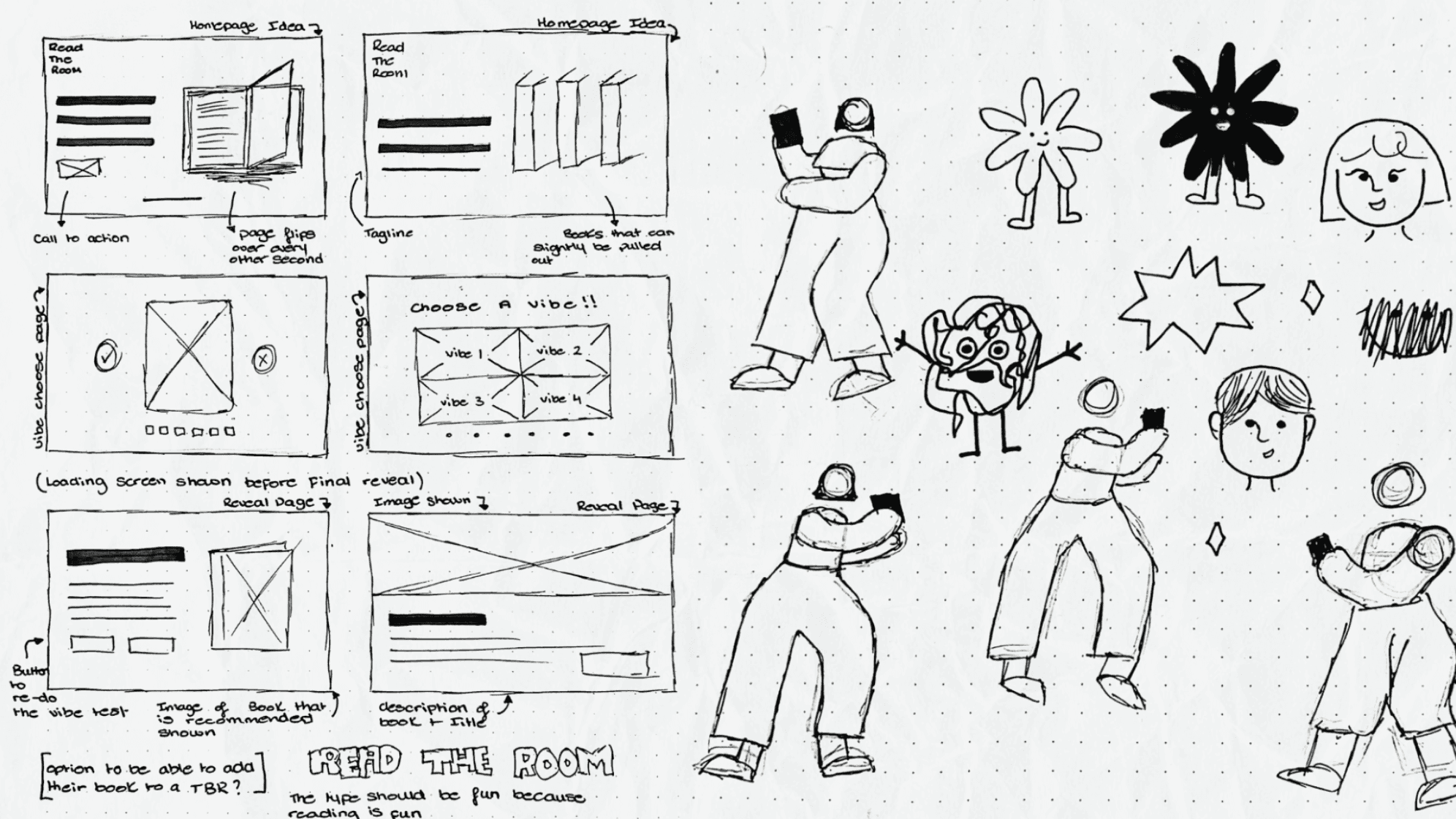
Creating Characters
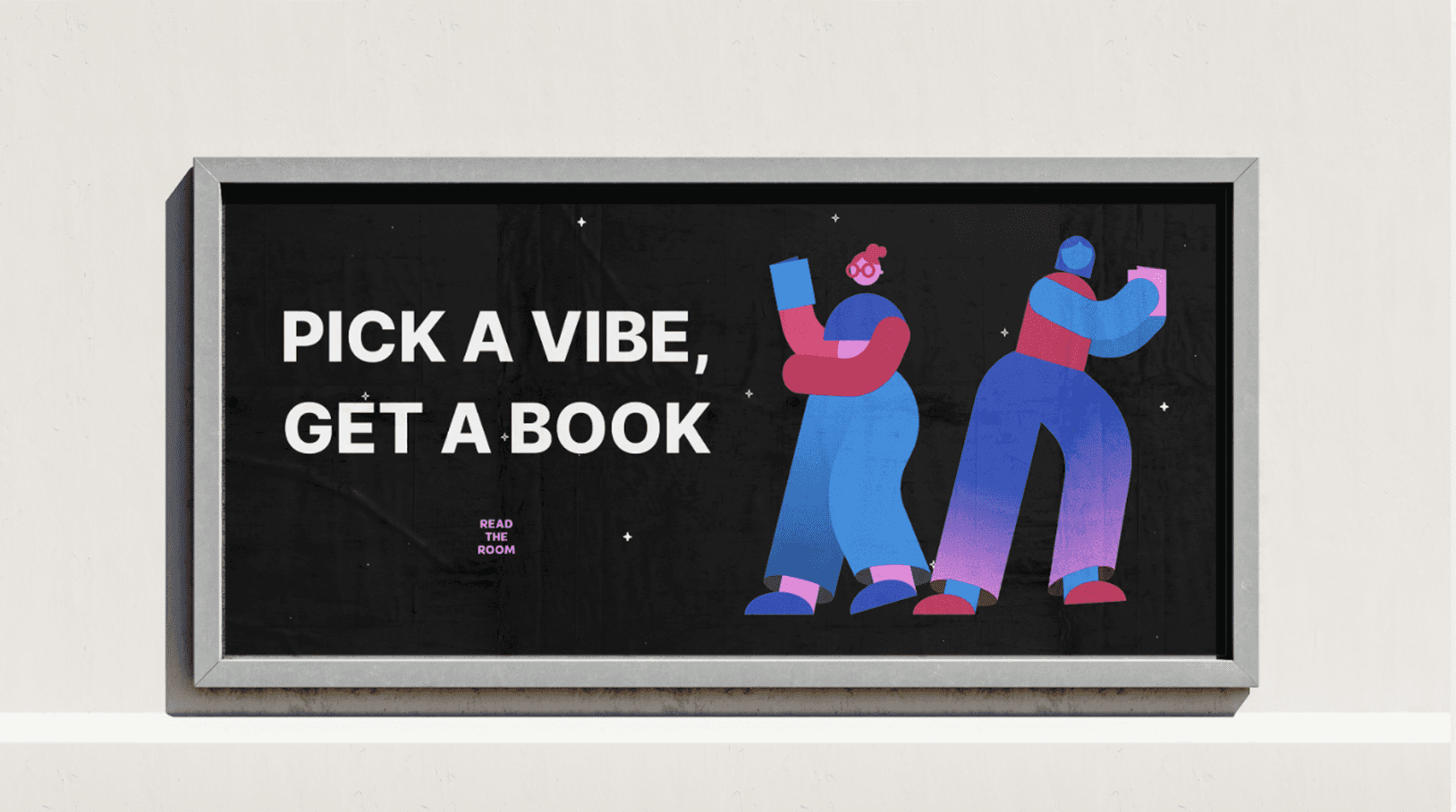
I introduced characters as a way to bring warmth and personality into Read The Room. Because book discovery can sometimes feel overwhelming or intimidating, I wanted the experience to feel friendly and encouraging from the start.
The characters are deliberately abstract and playful. I avoided realistic details so that they feel inclusive and relatable, allowing users to see themselves in the experience without feeling represented by a specific identity.
Creating the database
Wanting to take Read The Room further, I built a database of around 200 books to test the concept at a more meaningful scale. The collection intentionally spans a wide range of genres, from literary fiction to historical titles, ensuring the system was exposed to varied tones, themes, and narrative styles. By testing across a diverse dataset, I was able to validate whether the experience could adapt to different reader states and moments, rather than serving one dimensional or predictable suggestions.
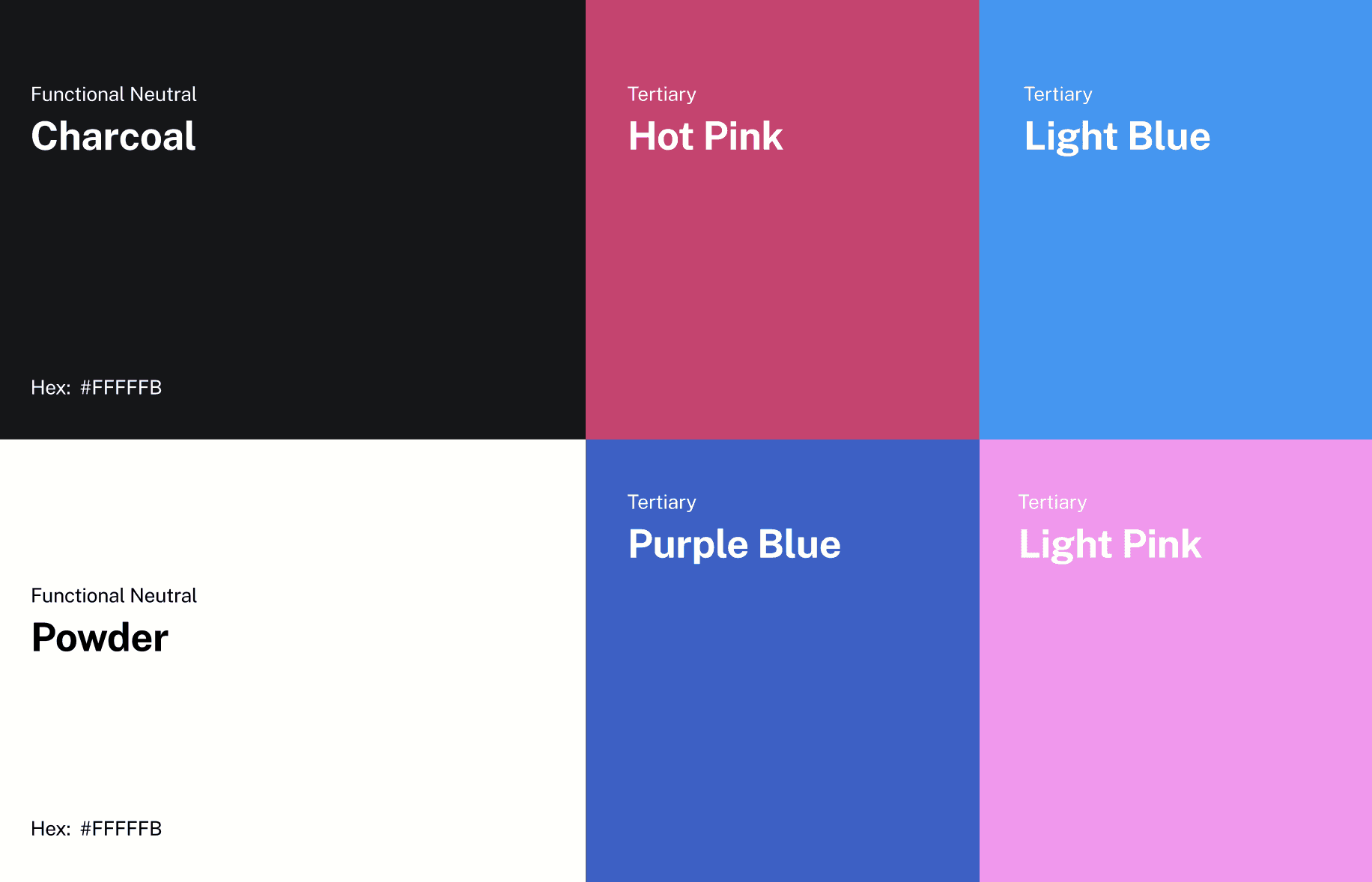
Accessibility
Accessibility was central to Read The Room, particularly given its focus on emotional states and low effort discovery. The interface prioritises clear hierarchy, readable typography, generous spacing, and predictable interactions to reduce cognitive load. Colour is used to support mood rather than convey critical information, ensuring the experience remains legible, inclusive, and easy to use across devices.
Final Touch
Looking back and moving forward
Read The Room began as an exploration of how design can support emotion led decision making, but evolved into a broader reflection on how digital products shape taste, discovery, and creativity.
The project pushed me to think more critically about abstraction, emotional design, and when to remove features rather than add them. It reinforced the importance of restraint, clarity, and trusting intuition alongside research.
Reflection
Looking back, the biggest learning was that not every problem benefits from more data or more choice. Read The Room taught me the value of designing for feeling as much as function, and of creating space for users to discover rather than be directed.
If I were to push this project further, I would explore deeper personalisation over time and community driven “rooms,”.